



When I started homeschooling my two daughters, I knew we would begin each day with Bible reading. “But now what?” I asked myself after reading Genesis 1 aloud that first day around the kitchen table. I honestly didn’t know, so I closed the Bible and grabbed the math book. I spent the next few years pondering the question, “How do I teach my kids the Bible?”
I found too many resources but no real answer. I could read from a children’s story Bible, but I wanted my girls to grow up hearing the real Bible. I scanned various kids’ devotion books, cringing at their cartoon pictures and slapped-on applications. I skimmed through summaries and discussion questions, but these seemed to do all the thinking for the kids instead of helping them delve into the Word.
Light dawned when I began editing Howard Joslin’s Bible for Learning. The first volume, God’s Perfect World, covers Genesis 1-2, teaching readers to study Scripture for themselves by asking seven questions: who, what, when, where, why, how, and how many? Readers also look for repeated words, actions, commands, and promises, uncovering insights about who God is and how we should respond to him.
“I can do this with my girls!” I exclaimed. I set up a little easel whiteboard on the kitchen table and wrote down the questions in bright colors. We read a passage and they searched their open Bibles for the answers. I did a lot less talking—and they did much more—than usual.
My favorite homeschool mentor, early 19th century British educator Charlotte Mason, said, “The mind can know nothing but what it can produce in the form of an answer to a question put by the mind to itself.” This sounds like a riddle, but I think she’s saying that learning only happens when students both ask the questions and find the answers themselves.
Half a world away from my kitchen table, Tanzanian pastors and their wives are learning to ask these same seven questions as they read and share the gospel. Howard and Fran taught this Bible study approach at last year’s Hope for Marriage conferences and continue to reinforce it during the Hope in a Broken World conferences this May and June.
Simple enough for my young children, the questions also work well in rural Tanzanian villages where people achieve a middle-school education or less. One rural pastor’s wife has been using the questions to teach women in her village ever since last year’s conference. She reported how this teaching style transformed her ministry.
The beauty of the questions lies as much in their depth as in their simplicity. Howard and Fran taught university students and graduates in the capital city of Dodoma during the second conference week this May. These students, who are training with Pastor James to become church planters, frequently cried, “Oh wow!” as they uncovered truth in Scripture using the seven questions.
One afternoon, Fran chatted with Tatu, a lawyer who serves as conference cook.
“Are you learning anything this week?” Fran asked.
“I wonder if I’ve been reading the same Bible!” Tatu marveled.
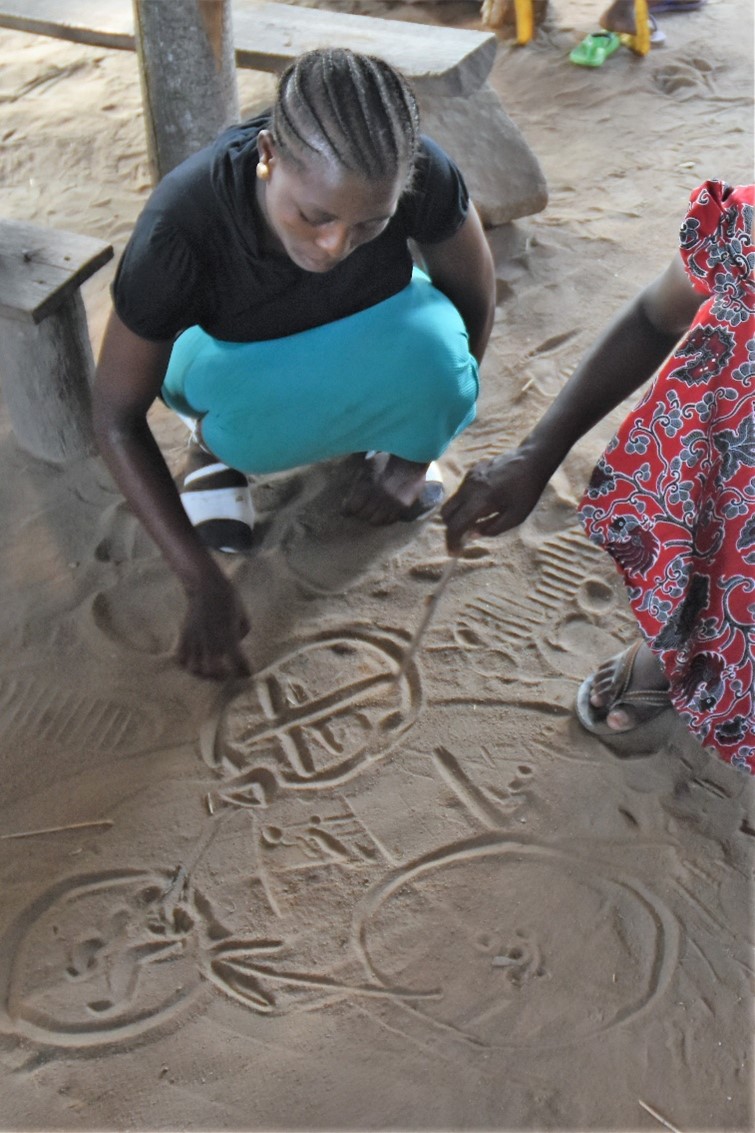
Along with the seven questions, Howard and Fran teach the Three Circles, a simple way to present the gospel. Like the questions, the Three Circles lends itself to different ages, audiences, and locations. In rural villages, the evangelism teams draw the circles on the ground with a stick. If the crowd is large, a team member stands in each circle so the people in the back can see. On a sidewalk, rocks or bottle caps represent the circles.
Nervous evangelists take confidence from the Three Circles’ simplicity and concreteness. In just a few minutes, they can share the entire gospel story, including God’s creation of a perfect world, man’s sin breaking the world, our present hope through Christ’s cross, and our future hope of the world made new.
But until this year’s conferences, we never suspected how beautifully the Three Circles could complement the seven questions.
After learning the Three Circles, the university students hit the streets of Dodoma to practice evangelism. One student shared the gospel only to have his listener ask him a question he couldn’t answer. He sensed God reminding him of John 3:16-18, so he quoted the passage and began leading his listener through the seven questions.
“He was teaching our style without realizing it!” Fran said.
This contagious method continues to spread as pastors respond to Howard and Fran’s challenge to share what they learned with five other pastors. More importantly, the gospel continues to spread as the pastors plan to team up for evangelism campaigns in three other villages every July, September, and November. When they’re not tending crops in their December to June growing season, they pray to harvest souls for God’s kingdom.